Picking a 1688 shop and a 1688 listing
How to find a product on 1688, read the seller strip, tell a factory from a trading firm, and judge one listing against another before you hand it to an agent.
Finding a product on 1688 without an account
There are three ways in. Search by keyword in Chinese, which works best with the words sellers use in titles: 卫衣 for hoodie, 重磅 for heavyweight, 纯棉 for pure cotton. Search by photo with the 以图搜款 button, which suits a product you already have a picture of. Or start from a category shelf on a finds site, open a product, and copy its 1688 link if the product came from there.
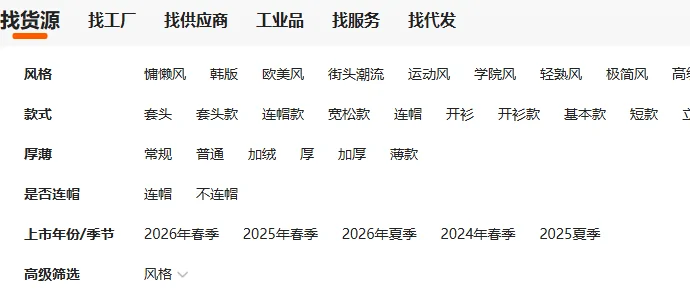
The results page has filters that matter for a buyer abroad. The 起订量 box sets a minimum order you can accept, so typing 1 hides listings that only sell by the dozen. The 一件代发 tick keeps sellers who ship single pieces. 经营模式, business type, separates makers from resellers. Logged out, 1688 let us run two or three searches before asking for a login, so decide your keywords before you start.
Reading the seller strip
The strip at the top left of every offer page is the closest thing 1688 gives a visitor to a seller rating. On the hoodie page it read: 揭阳市揭东区新亨镇力信服装厂, a garment factory in Jieyang; 入驻4年, four years on 1688; 主营 男式T恤, main business men's T-shirts; a four-star supply-chain rating; quality pass rate 100%; overall fulfilment 92.7%; repeat buyers 66.7%.
Use these figures to compare two shops selling the same item. A higher fulfilment rate means fewer late or failed shipments across the shop. The repeat-buyer rate says resellers come back, which matters more than a star rating because resellers lose money on bad stock. What the strip cannot tell you is how one particular listing will turn out, so it is a seller signal, not an item guarantee.

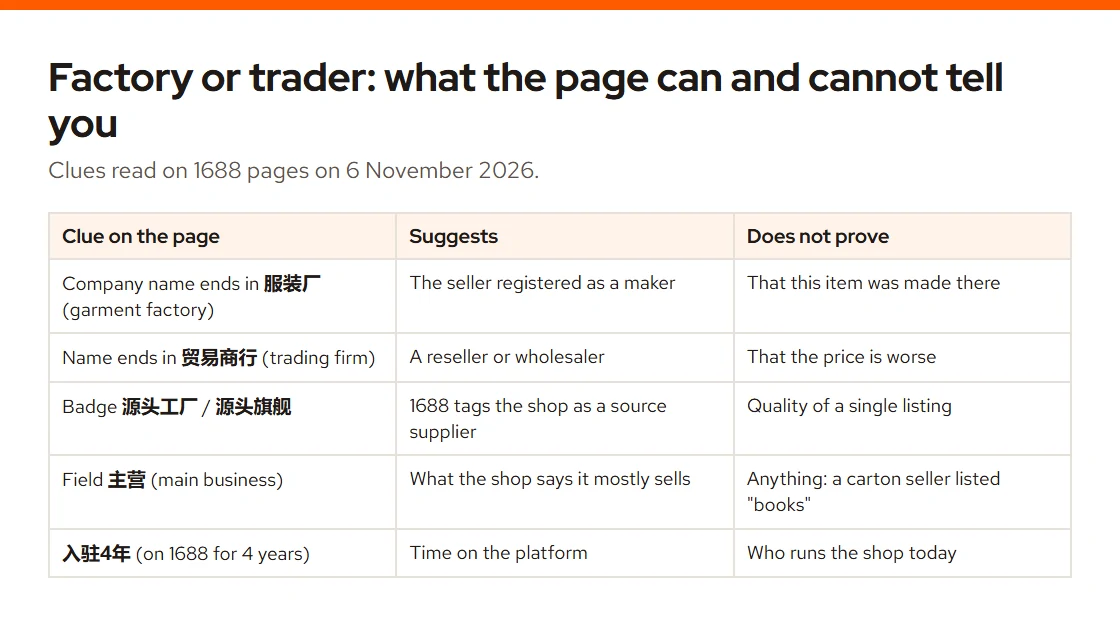
Factory or trading firm
Company names on 1688 carry a suffix that says how the business registered: 厂 for a factory, 有限公司 for a limited company, 商行 or 贸易 for a trading firm. Badges add 1688's own labels: 源头工厂 (source factory) and 源头旗舰 (source flagship) on some shops, 实力商家 on others. Factories tend to have one main product line and deeper stock in it. Traders carry more variety and sometimes the same item as a factory at a small markup, with faster replies.
Neither is better by default. The useful question is whether the shop's main business matches the item you want. A hoodie from a shop whose main business is men's T-shirts is close; a carton from a shop whose main business field says books, as we saw on one 1688-operated store, tells you the field is not always maintained.
Judging one listing against another
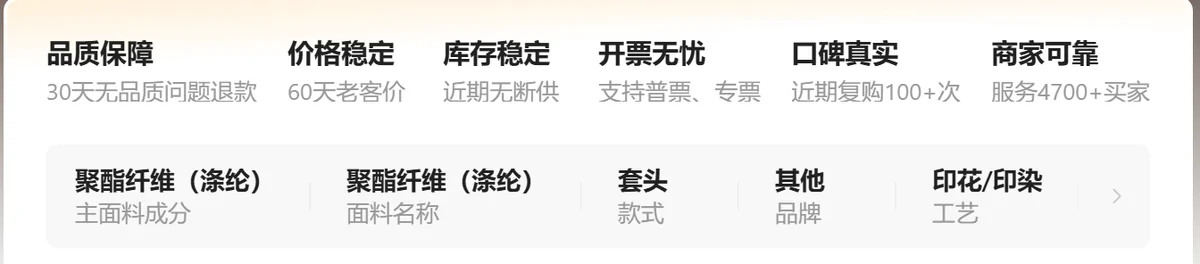
Once two or three shops sell what looks like the same item, compare the listings field by field. Start with the attributes: fabric, fabric weight (克重), season and source type (现货 means stock on hand). Then the options: are the colours you want separate options, and does each show stock? Then reviews and sales. The hoodie showed a 4.2 score over a review count displayed as 100+; reviews on 1688 come largely from resellers, so they talk about stock, packing and speed more than fit.
Treat the network-wide sales figure with care. 1688's own price notes say it adds sales of the same style across several platforms, Taobao and Tmall included, and that same style does not mean the same brand or quality. A big number there describes a design's popularity, not this shop's record.
Asking the seller, through your agent
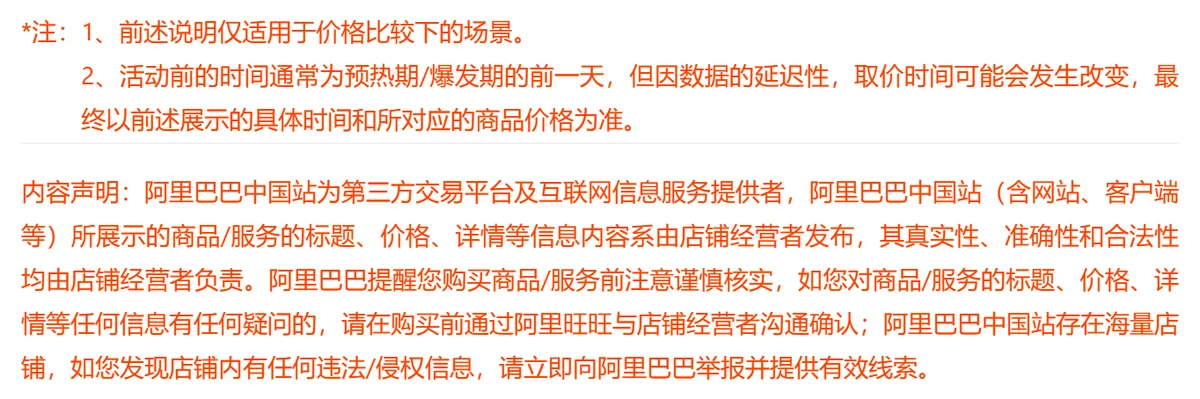
1688's red declaration under every listing tells buyers to confirm details with the shop on 阿里旺旺 before buying. As a buyer abroad you do this through the agent: write the question in the order remark or in a support ticket, in plain English, with the offer number. Good questions are short and checkable: does the price for two pieces apply if the two are different colours, what is the carton size for three pieces, is the 5XL in stock today, is there a size chart in centimetres.
Ask before paying, not after. Once the agent has bought, a change usually means a return to the seller, with return freight paid by someone.